
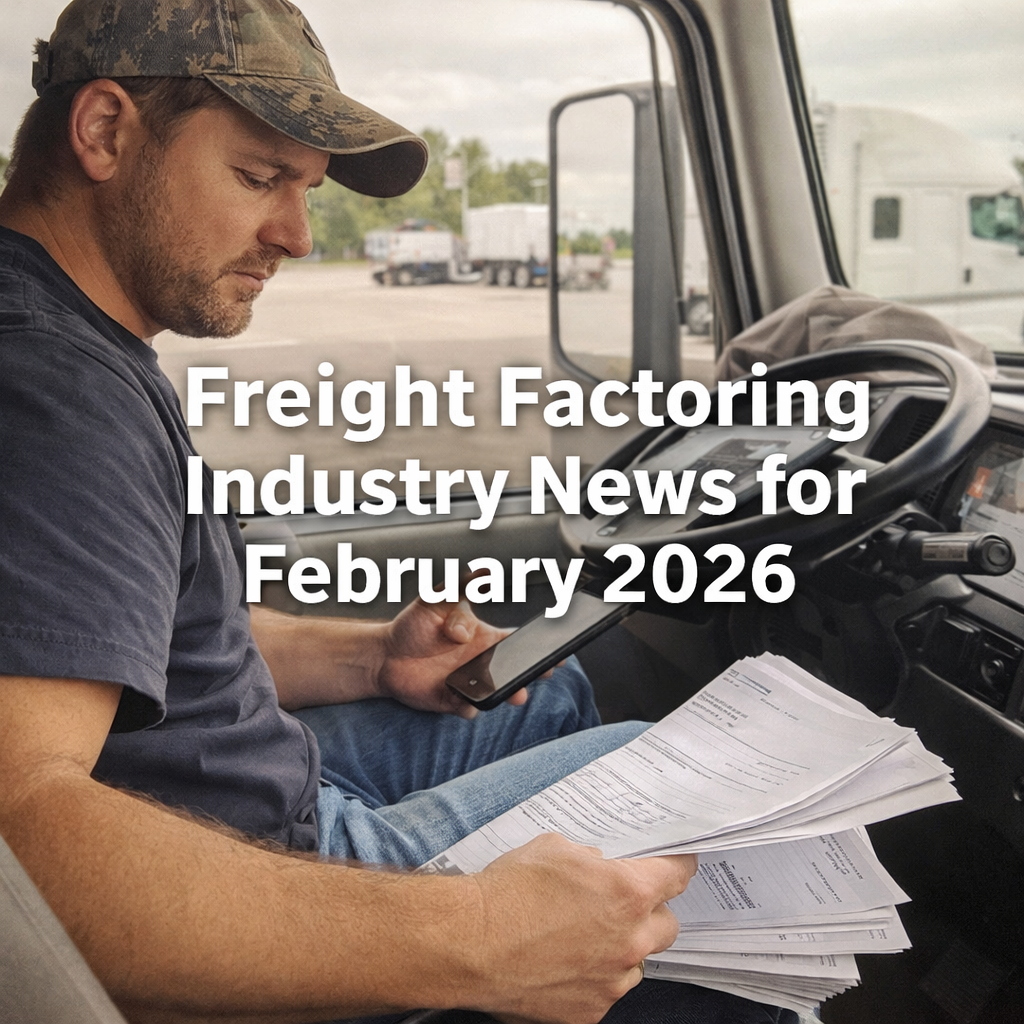
The freight market never stands still. Rates rise and fall. Fuel prices shift. Regulations change. Technology moves fast. And through all of it, owner-operators and small fleet trucking companies still face one major challenge: getting paid quickly and keeping steady cash flow.
Freight factoring remains one of the most widely used financial tools in trucking. Whether you call it truck factoring, invoice factoring, or accounts receivable financing, the goal is the same — turn unpaid freight invoices into working capital.
In this February 2026 update, we’ll break down the latest freight factoring industry news, regulatory updates, trucking trends, new technology, and major carrier developments that could impact your business.
1. Freight Market Update: Signs of Gradual Recovery
After a prolonged freight recession from 2023 through much of 2024, market conditions improved slightly in late 2025. Entering early 2026, analysts are seeing cautious optimism.
Spot Rates Showing Modest Gains
Spot market rates ticked upward in December 2025 and January 2026 in several lanes, especially:
- Midwest dry van routes
- Southeast reefer lanes
- Regional flatbed markets tied to construction
While rates are still below pandemic highs, they are stabilizing. For owner-operators relying on the spot market, this matters. Higher rates mean stronger invoice values — which directly affects freight factoring advances.
When your average invoice increases, your factoring advance (usually 85%–97% of the invoice value) increases too. That can improve weekly cash flow even if volume remains steady.
Capacity Continues to Tighten
The number of small carriers operating under active authority remains lower than pre-2023 levels. Insurance costs, equipment prices, and fuel volatility pushed many marginal carriers out of the market.
A tighter capacity environment typically benefits:
- Owner-operators with clean safety records
- Small fleets with consistent broker relationships
- Carriers with strong credit customers
For freight factoring companies, this shift means fewer but generally more stable clients. Many factoring providers are reporting improved credit quality among trucking companies compared to 2024.
2. FMCSA and Regulatory Updates to Watch
Regulatory changes can directly impact freight factoring agreements, compliance costs, and operational planning.
Here are the key updates as of early 2026.
FMCSA Safety and Fitness Determination Rule Progress
The Federal Motor Carrier Safety Administration (FMCSA) continues work on updates to its Safety Fitness Determination (SFD) rule. While not fully implemented yet, new scoring adjustments are expected to increase scrutiny of:
- Unsafe driving violations
- Hours-of-Service (HOS) compliance
- Maintenance violations
Why this matters for freight factoring:
Many factoring companies review a carrier’s safety profile before approving factoring services. A poor CSA score can impact:
- Your approval for invoice factoring
- Your advance rate
- Your ability to secure non-recourse factoring
Carriers with strong safety ratings may find it easier to qualify for better freight factoring rates and terms.
State-Level Employment Law Changes
Several states have introduced or clarified independent contractor classification laws affecting owner-operators leased to carriers.
If you’re operating under your own authority, this likely has limited impact. However, if you are leased to a carrier but invoice independently, your freight factoring company may request additional documentation to confirm:
- Your independent business status
- Proper contract structure
- Compliance with state labor laws
Staying compliant avoids disruptions in funding.
3. Fuel Prices and Operating Costs: Cash Flow Pressure Continues
Fuel prices rose modestly in late January 2026 due to global supply disruptions and refinery maintenance. While not extreme, even small increases tighten margins for small carriers.
Other rising costs include:
- Commercial truck insurance premiums
- Equipment financing rates
- Maintenance and parts pricing
When operating expenses rise, cash flow gaps become more noticeable. That’s where freight bill factoring plays a key role.
Instead of waiting 30–45 days for broker or shipper payment, invoice factoring allows carriers to:
- Cover fuel immediately
- Pay drivers weekly
- Stay current on truck payments
- Avoid high-interest short-term loans
Many factoring companies are reporting increased inquiries from small fleets seeking flexible cash flow solutions rather than traditional bank credit.
4. Growth in Digital Freight Factoring Platforms
One of the biggest industry trends in early 2026 is the continued growth of digital-first freight factoring companies.
What’s Changing?
Modern freight factoring providers are offering:
- Mobile app invoice uploads
- Same-day ACH funding
- Real-time broker credit checks
- Online dashboards
- Automated fuel card integration
Some platforms now integrate directly with transportation management systems (TMS) and load boards, reducing paperwork.
For owner-operators, this means:
- Faster funding
- Fewer phone calls
- More transparency
- Clear fee breakdowns
Technology is reducing the friction that once made factoring feel complicated.
AI-Powered Risk Assessment
Several large factoring companies have begun using AI tools to assess broker credit risk. These systems analyze:
- Payment history
- Days-to-pay averages
- Public credit data
- Industry dispute patterns
This can help protect carriers from slow-paying or high-risk brokers — especially under non-recourse freight factoring agreements.
5. Non-Recourse Factoring Demand Rising
With economic uncertainty still present, more carriers are asking about non-recourse freight factoring.
Under non-recourse agreements, the factoring company assumes the credit risk if the broker or shipper fails to pay due to insolvency. In recourse factoring, the carrier remains responsible.
In early 2026, demand for non-recourse factoring is increasing because:
- Some mid-sized brokers struggled financially in late 2025
- Payment delays have become more common
- Carriers want protection from bankruptcies
However, non-recourse factoring typically comes with:
- Slightly higher factoring fees
- Stricter credit approval
- Broker-specific eligibility
Understanding your risk tolerance is key when choosing between recourse and non-recourse factoring.
6. Big Trucking Company News Impacting Small Carriers
Large carrier developments often ripple through the freight market.
Carrier Consolidation Continues
A few mid-sized regional carriers announced mergers in January 2026. Consolidation often leads to:
- Increased shipper leverage
- Adjusted lane pricing
- Broker relationship changes
For small carriers, this can mean fewer direct shipper opportunities but more brokerage loads entering the spot market.
That increases reliance on broker credit — and makes freight factoring credit checks even more important.
Bankruptcy and Restructuring Activity
While bankruptcy filings have slowed compared to 2023–2024 peaks, restructuring continues in parts of the trucking sector.
Whenever a broker or carrier shuts down unexpectedly, unpaid invoices become a serious threat.
This reinforces the value of:
- Strong broker vetting
- Credit monitoring
- Factoring companies that actively manage collections
7. Factoring Rates and Fee Trends in Early 2026
Freight factoring rates have remained relatively stable over the past few months.
Typical ranges in February 2026:
- 1% to 3.5% per invoice (depending on volume and risk)
- Advance rates between 85% and 97%
- Fuel card discounts as added value
Some competitive trends include:
- Reduced minimum volume requirements
- No long-term contracts
- Lower termination fees
- Flat-fee factoring options
Smaller factoring companies are competing aggressively for owner-operators, especially those with strong broker portfolios.
8. Transparency and Contract Clarity Becoming a Bigger Focus
Truckers are becoming more educated about freight factoring agreements.
Common concerns in 2026 include:
- Hidden fees
- Long-term contracts
- Monthly minimums
- Termination penalties
- Reserve account confusion
Many factoring providers are responding by simplifying contracts and clearly explaining:
- Discount rate structure
- Reserve release timing
- Recourse terms
- Credit approval policies
Before signing any freight factoring agreement, review:
- Notice of assignment terms
- UCC filings
- Contract length
- Early termination clauses
9. Payment Terms and Broker Behavior Trends
In early 2026, average broker payment terms remain around:
- Net 30
- Net 45
- Occasionally Net 60
Some brokers are experimenting with digital payment platforms offering quicker settlement in exchange for small discounts.
This resembles dynamic discounting models seen in other industries.
For carriers not using freight factoring, these models may reduce invoice value. But for carriers already factoring, the factoring company often handles negotiations and collections.
10. Fuel Cards and Value-Added Services Expanding
Many freight factoring companies now bundle additional services:
- Fuel cards with discounts
- IFTA reporting support
- Back-office support
- Free credit checks
- Load board access
This bundling strategy increases retention and makes factoring companies more like financial service partners rather than just funding sources.
Small fleet owners should compare not just factoring rates, but total value provided.
11. Fraud Prevention and Double Brokering Crackdowns
Double brokering and freight fraud remain industry challenges.
In late 2025, several coordinated industry efforts aimed to combat:
- Identity theft
- Fraudulent MC authorities
- Broker payment scams
Factoring companies play a major role in fraud prevention by verifying:
- Rate confirmations
- Bill of lading documentation
- Broker identity
- Active authority status
Strong fraud controls protect carriers from hauling loads they may never get paid for.
12. Economic Outlook for Spring 2026
Looking ahead to spring:
- Construction freight may increase due to infrastructure projects
- Produce season will impact reefer markets
- Retail restocking could tighten capacity
A moderate demand increase typically improves invoice values and volume — which can improve cash flow for carriers using freight factoring services.
However, fuel volatility and interest rates remain factors to watch.
13. Choosing the Right Freight Factoring Partner in 2026
If you’re evaluating factoring companies this year, focus on:
- Transparent factoring fees
- Strong broker credit database
- Recourse vs. non-recourse options
- Quick funding (same-day ACH or wire)
- No hidden charges
- Responsive customer service
Freight factoring is not just about speed — it’s about partnership.
Final Thoughts: Why Freight Factoring Remains Essential
As we move through February 2026, one thing remains clear: cash flow is king in trucking.
Freight factoring continues to provide:
- Immediate working capital
- Protection against slow-paying brokers
- Simpler back-office operations
- Predictable cash flow
For owner-operators and small fleet trucking companies, the right factoring company can make the difference between surviving tight markets and growing through them.
The freight market may rise and fall, but the need for fast invoice payment remains constant.
Stay informed. Review your contracts. Monitor your broker credit. And choose financial tools that strengthen — not strain — your trucking business.
We’ll continue monitoring freight factoring industry news and trucking developments throughout 2026 to keep you ahead of the curve.